Lluna, AI Aesthetic Consultant
Know before you sit in the chair.
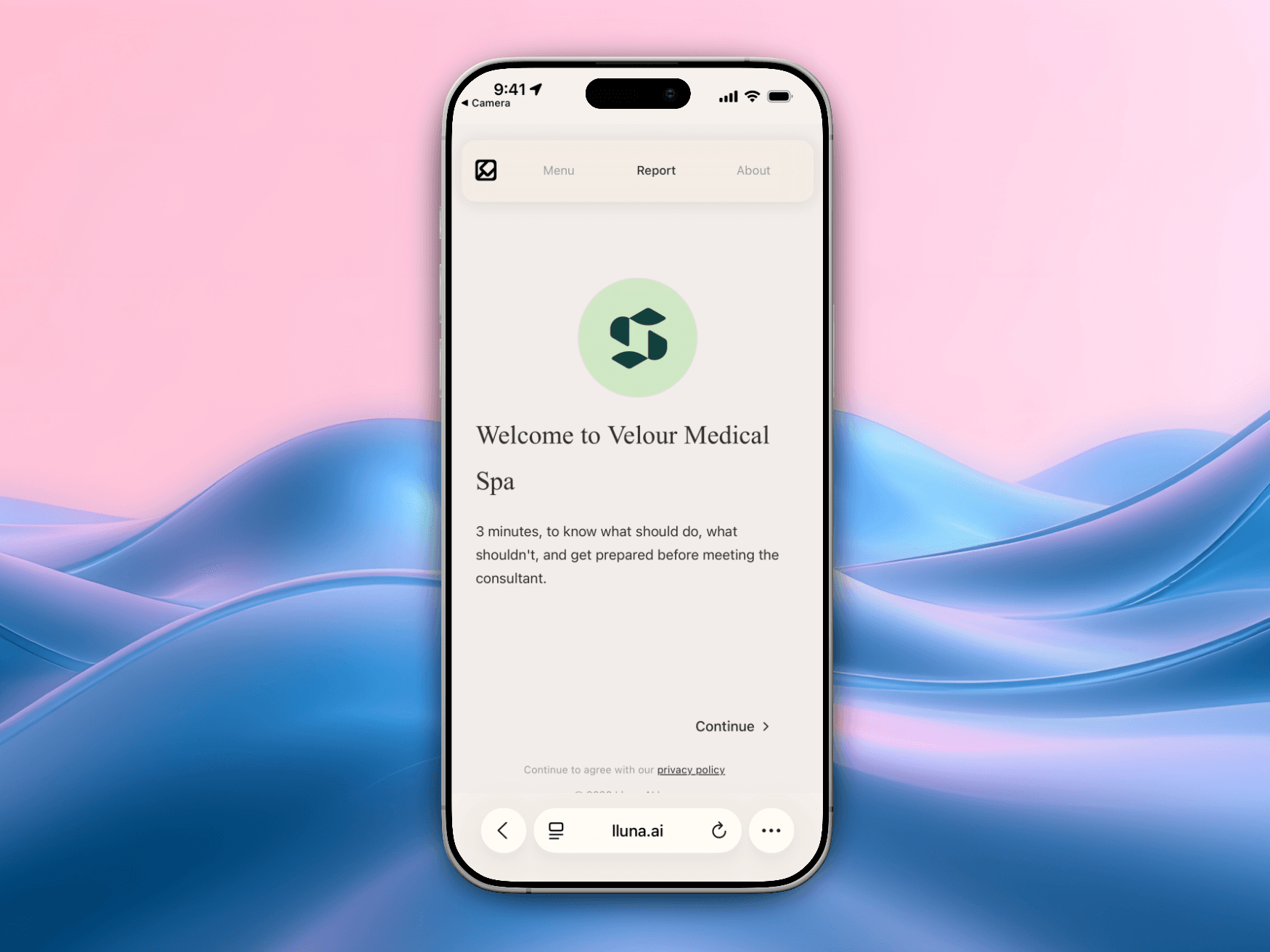
Overview
The consultation, before the consultation.
Lluna is an AI aesthetic consultant built for the one window everyone overlooks: the ten-odd minutes a client spends waiting before the consultation.
Watch any medspa and the same scene repeats. A client checks in, sinks into the lounge sofa, and waits twelve, fifteen minutes before a consultant calls them in. That dead time is pure anxiety, they know almost nothing, and they're about to sit across from someone who knows everything and is paid to close.
Lluna lives in those minutes. A client scans a QR code on the table, and by the time they're called in they've browsed the clinic's real menu, read a personalized plan, and walked in with questions instead of guesses, one product built for both sides of the chair.
The problem
Both sides of the chair are guessing.
Consumers
- Clients rarely know what a therapy actually does, its effects, downtime, or how it compares to the alternatives on the menu.
- The biggest fear walking in is being over-sold; the trust between client and consultant is ambiguous at best.
- Everyone wants the cost-effective plan: real results, no money wasted on treatments that won't work for them.
Medical-spa consultants
- There's too much to uncover in twenty minutes, history, budget, real goals, so the consultant spends the whole slot digging and still never quite lands on what the client actually needs.
- Every recommendation can read as a pitch, the harder you sell, the less credible you sound.
- Consultants are measured on revenue, but an unprepared, skeptical client buys a single treatment at best.
Solution 01
Menu, the whole price list, before anyone has to ask.
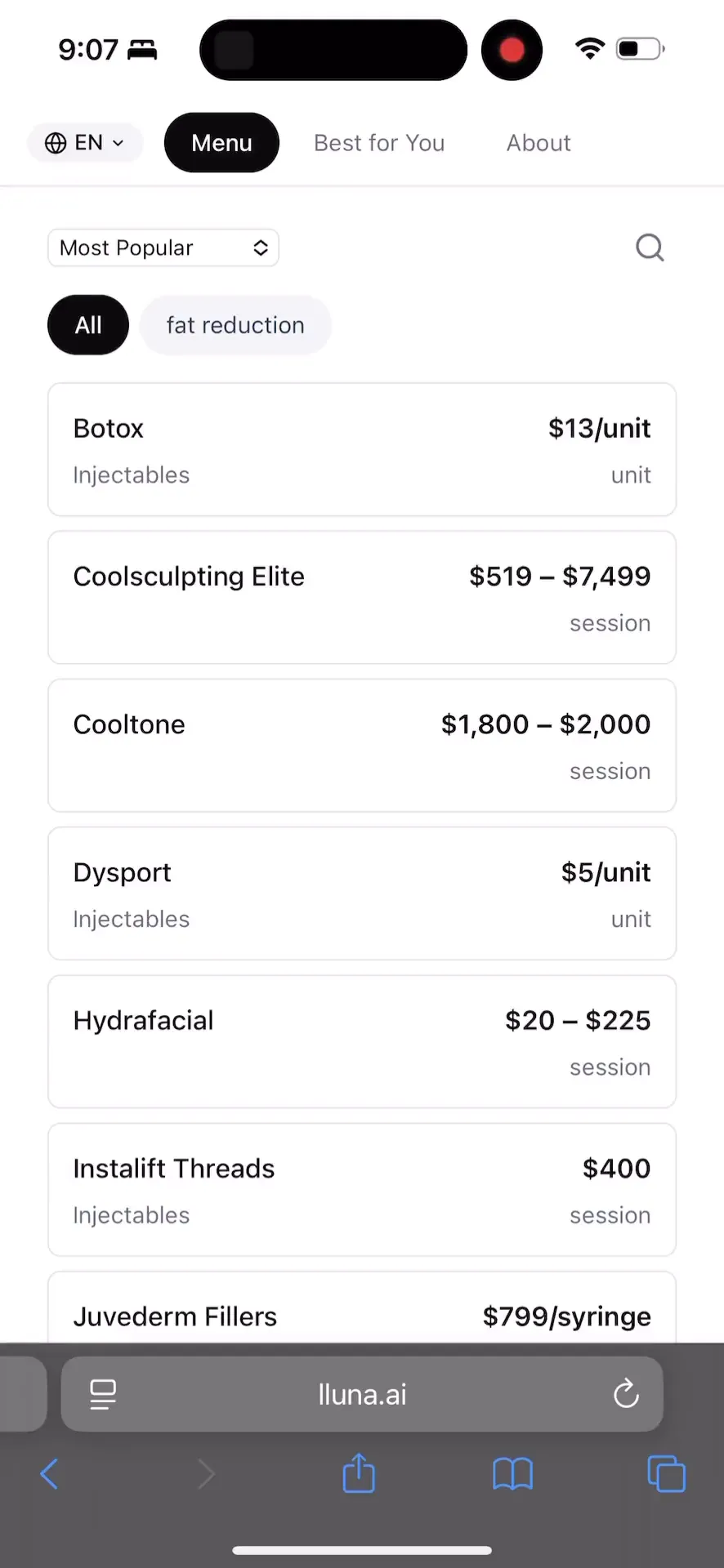
The Menu tab: the clinic's live treatment menu, sorted by most popular.
Solution 02
The report, a personalized plan in about a minute.
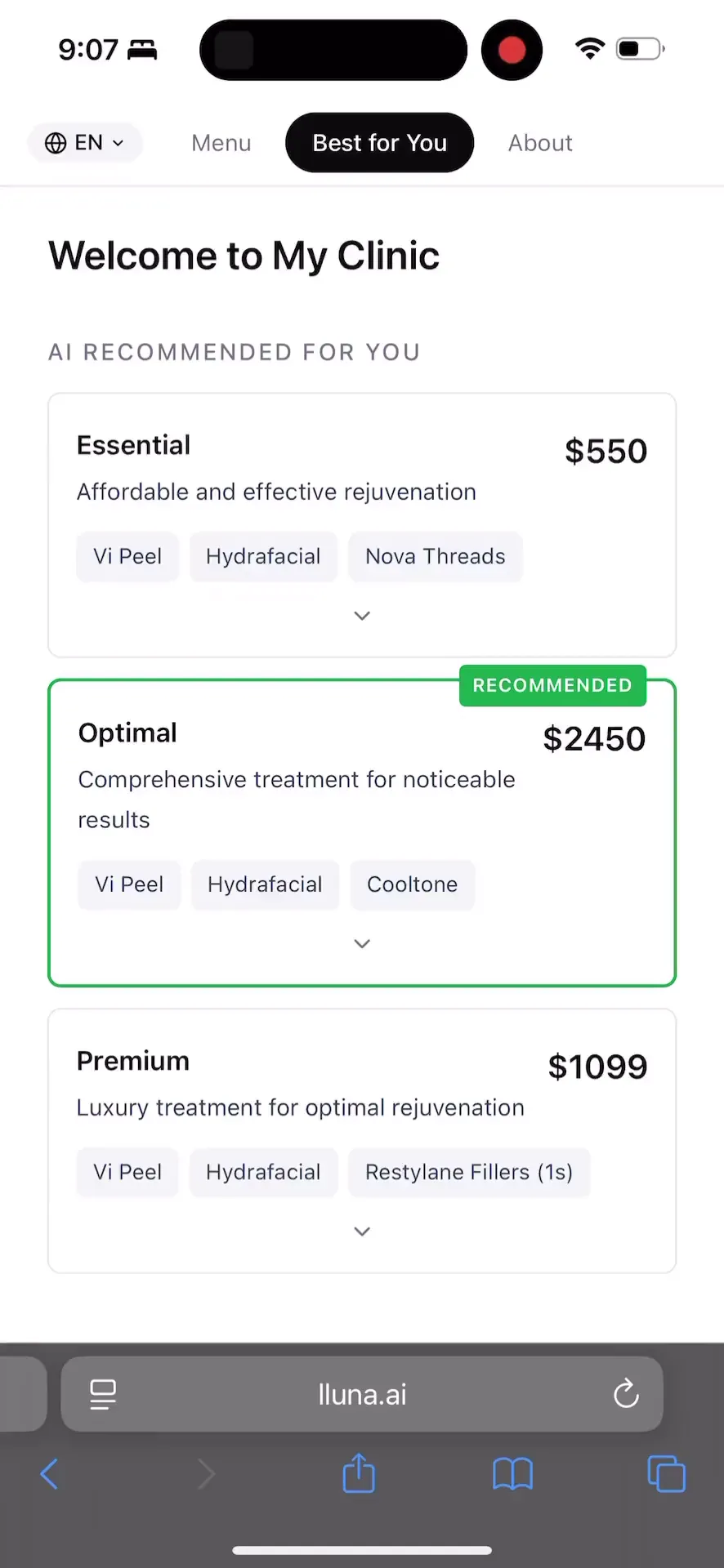
The Best for You tab: tiered plans, each with a synergy callout and a price breakdown.
The recommendation logic behind every plan is deliberately opinionated:
Solution 03
Clinic console, the consultant's side of the loop.
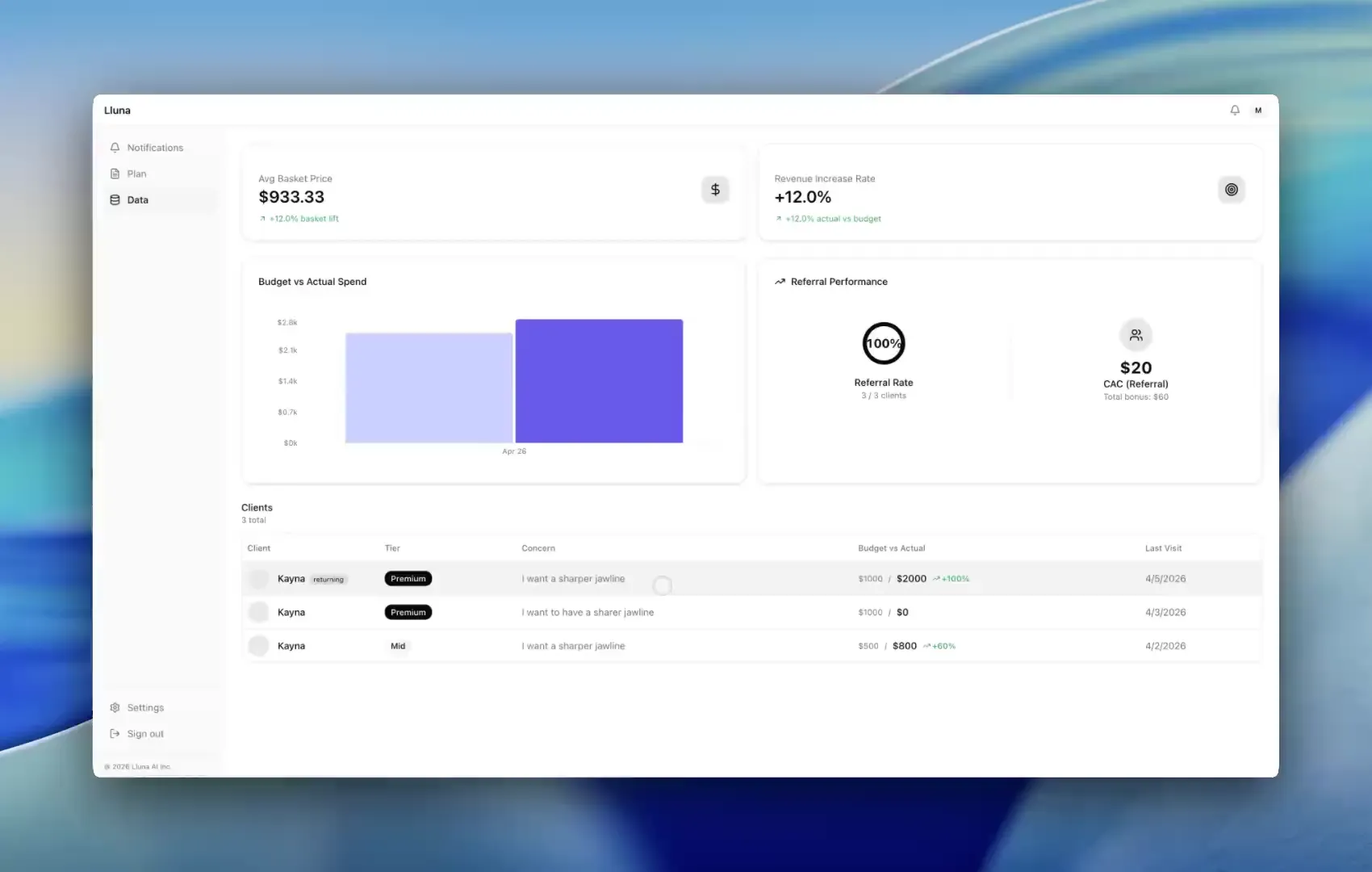
One console for the clinic: notifications, client plans, and revenue data behind a single navigation bar.
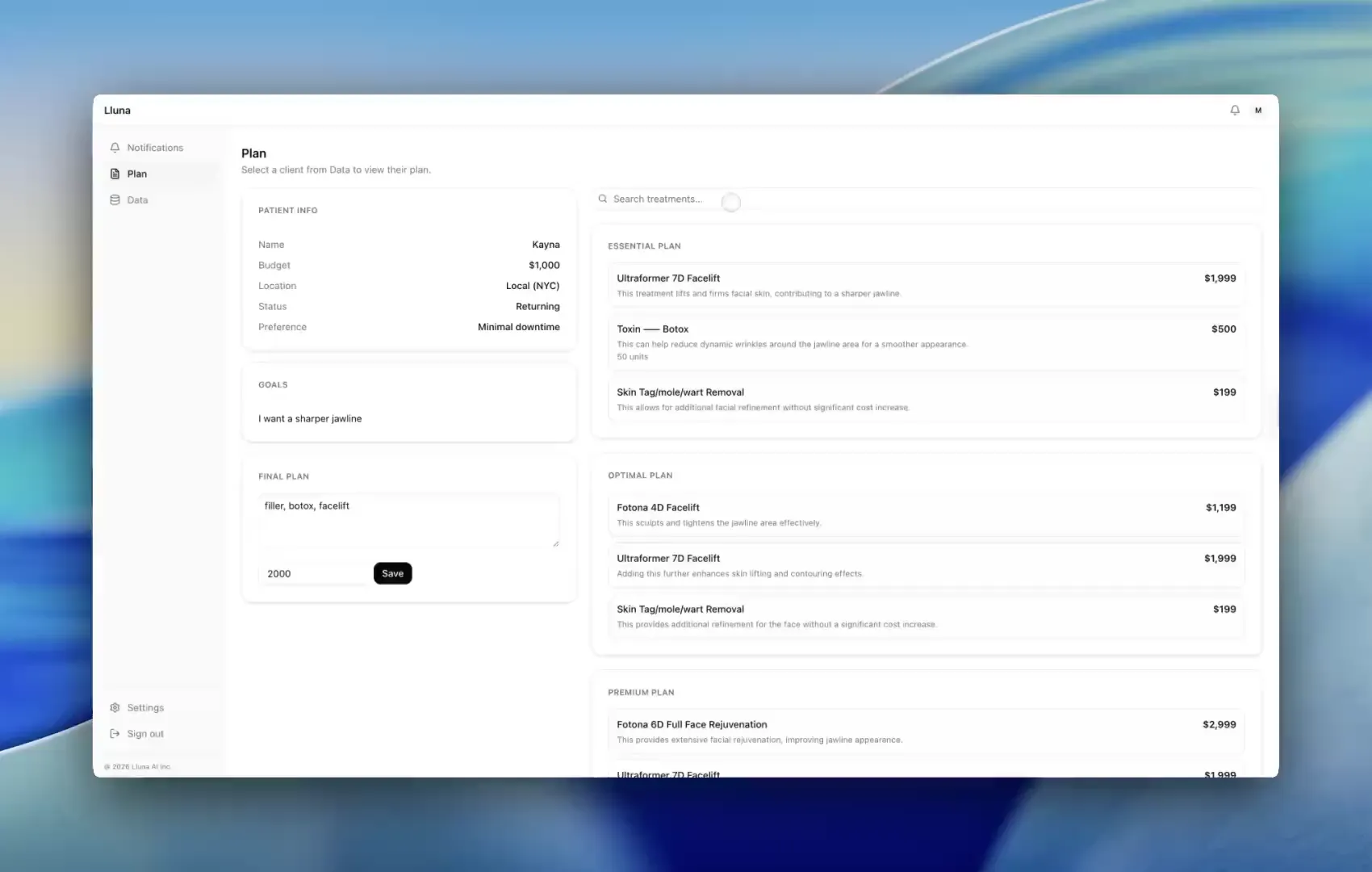
Pull up any treatment on the fly, its efficacy window, downtime, and recovery, without leaving the plan.
The outcome
<5% acceptance
Selected for Y Combinator's AI Startup School 2026, 2,000+ accepted from 30,000+ applicants.
8%+ per clinic
Per-clinic revenue increased for pilot clinics on the B2B2C model.
$1.6K ACV signed
3 clinics signed onto the pilot program out of 40+ pitched, including partner clinic Viqi Medical Spa in Los Angeles.