Signal-32: Assess Your Next Investment in 32 Questions
An internal tool to quickly evaluate early-stage AI startups in 32 questions.
Overview
Built for your next venture bet.
Signal-32 is a 32-question quantitative framework for assessing early-stage AI startups, calibrated against the early-stage profiles of 24 successful AI companies. The idea is simple: build a scoring framework, benchmark the winners against it, then read the variance between a target company and that benchmark as the real signal. The questions draw on the "investing in people" philosophy of Sequoia Capital, Benchmark, and other firms. For reference only, not investment advice.
Step 1
How I derived the framework: four dimensions, 32 questions.
I started by condensing mainstream VC evaluation criteria, team background, research depth, product execution, data and distribution, AI competitive advantage, into four major dimensions of eight questions each, scored 1–5. Every section can be scored entirely from publicly available information.
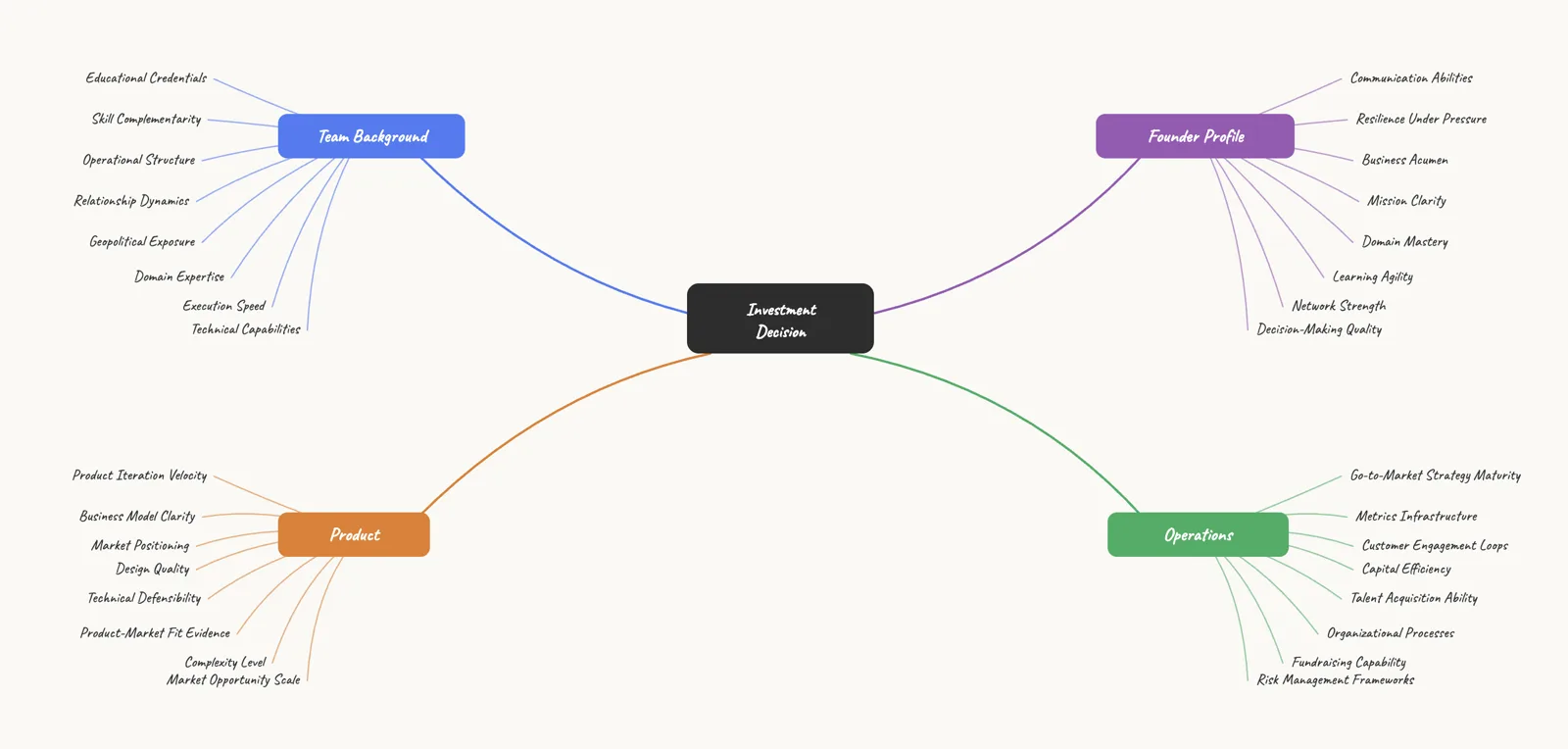
Mind map: brainstorming the 32 factors that shape an investment decision across four dimensions.
Step 2
Picking 24 winners and scoring them at day one.
With this framework in hand, I selected 24 AI-native companies with outstanding early performance, spanning the model, application, and infrastructure layers, and scored each one on the same 32-question rubric using only publicly available information. That produced a distribution of "success samples."
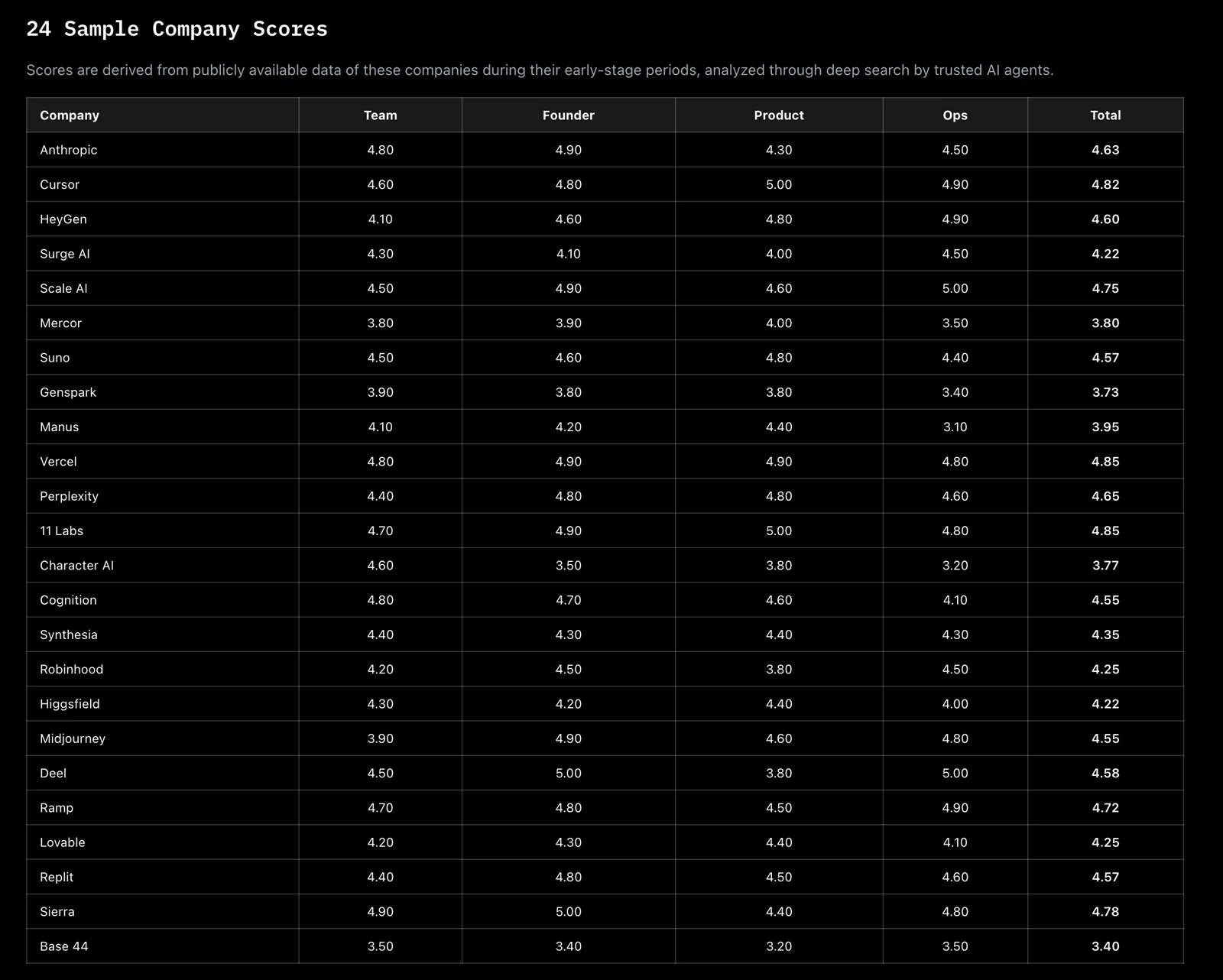
The 24-company benchmark table: scores derived from publicly available early-stage data, analyzed through deep search by trusted AI agents.
Step 3
How to use it.
Before trying to buy options in these companies on the primary market or making an angel investment, I score the target on the same 32 questions and compare it against the 24-company benchmark, reading the variance dimension by dimension. The variance is what actually drives the decision: if a team scores 2.6 under the same objective and subjective criteria, that's my cue to think hard about whether the investment is worth making.
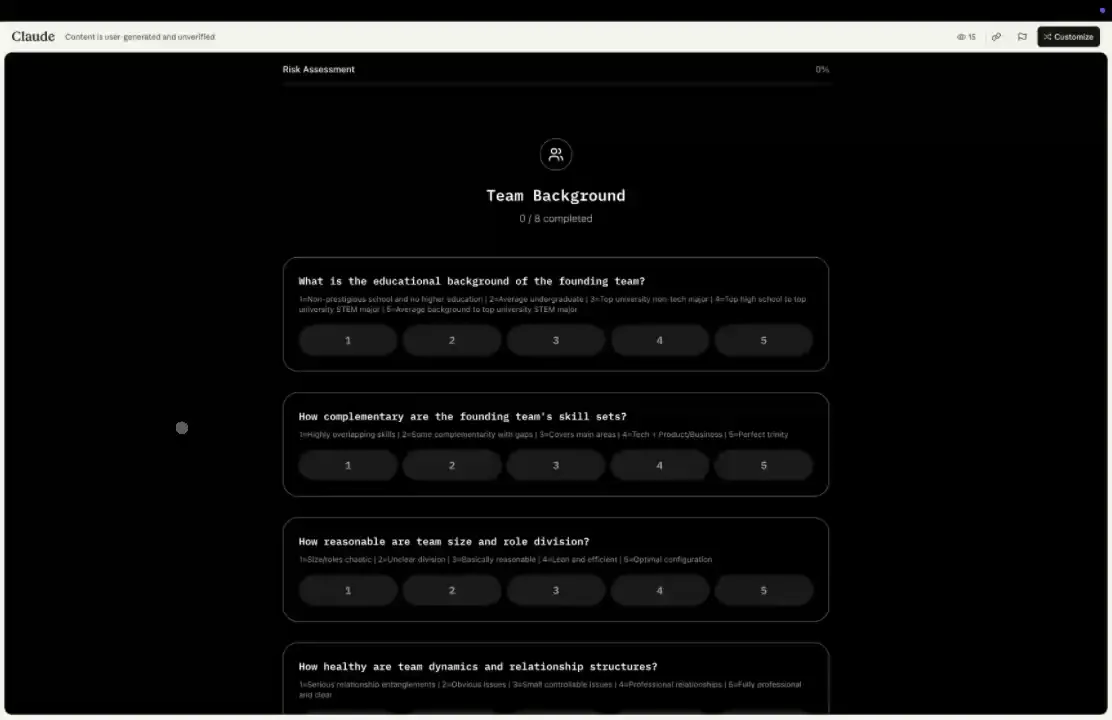
Sample questions from the Team Background section of the assessment framework.